How ChameleonTech Works

How ChameleonTech Works

How ChameleonTech Works

ChameleonTech systems use controlled illumination environments to reconfigure the appearance of light-reactive materials used in wearable devices and accessories.

ChameleonTech systems use controlled illumination environments to reconfigure the appearance of light-reactive materials used in wearable devices and accessories.

ChameleonTech systems use controlled illumination environments to reconfigure the appearance of light-reactive materials used in wearable devices and accessories.

1

A product surface incorporates materials capable of changing visual appearance in response to light or electronic control.


A product surface incorporates materials capable of changing visual appearance in response to light or electronic control.


Light-Reactive Surface

2

A dedicated system directs controlled illumination toward the surface in a structured and repeatable way.


A dedicated system directs controlled illumination toward the surface in a structured and repeatable way.


A dedicated system directs controlled illumination toward the surface in a structured and repeatable way.


Controlled Illumination

Controlled Illumination

3

The interaction between light and material produces a visible change in color or appearance.

Appearance Transformation
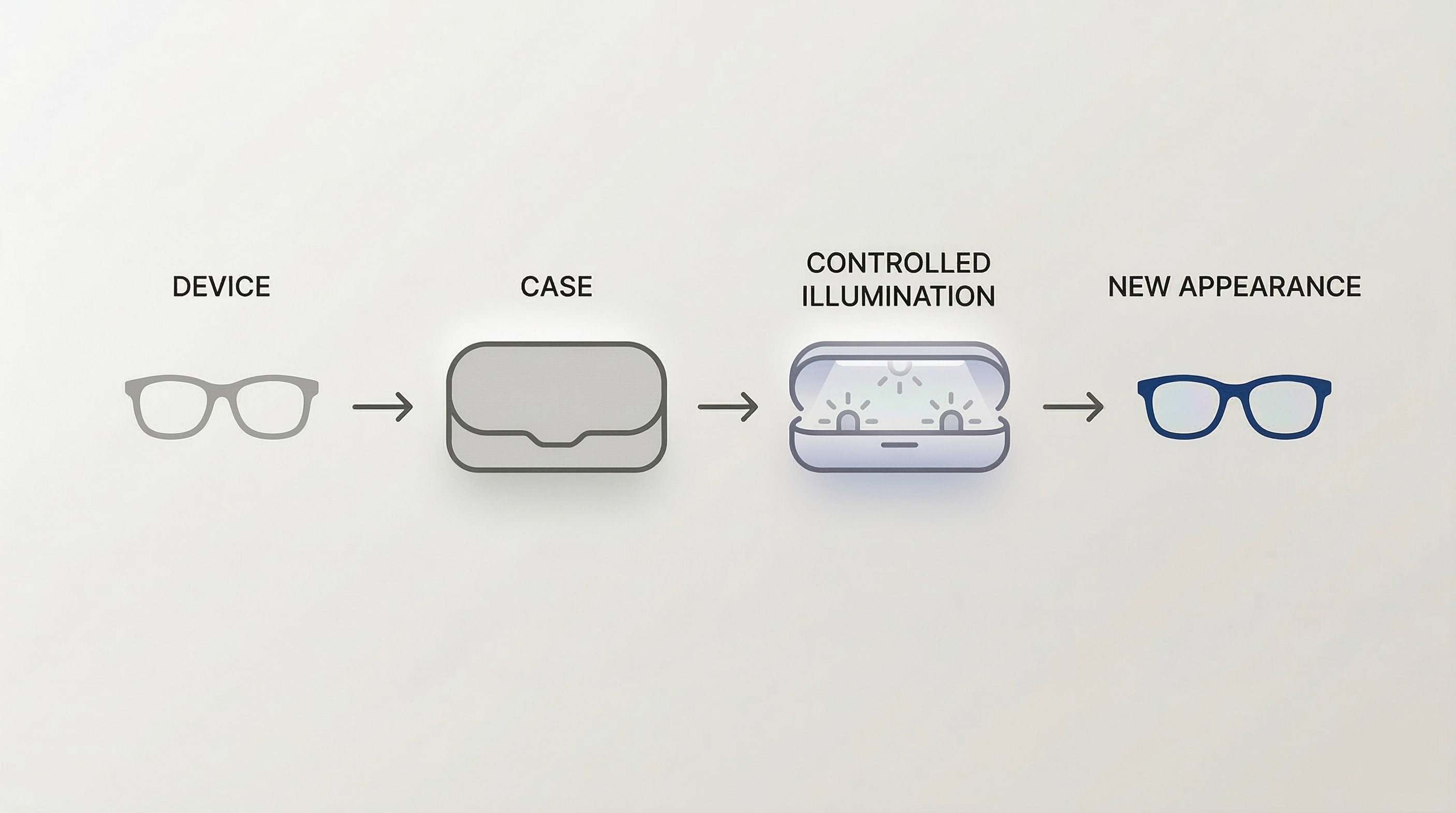
System Components

The programmable aesthetics platform is composed of three core elements that operate together to modify the visual appearance of coated product surfaces.

Device : A wearable product or accessory incorporating a light-reactive surface or coating. Examples include eyewear frames, rings, watch components, or product housings.

Container / Case: A controlled enclosure designed to hold the device during the appearance transformation process. The case positions the device relative to internal light sources and creates a consistent illumination environment.

Controlled Illumination System: An integrated light system capable of emitting specific wavelengths and intensities of light to activate or deactivate color states within the surface material.

Controller: A controller coordinates the illumination sequence and timing, allowing appearance changes to be applied consistently and repeatedly.

Result: The device exits the enclosure with a modified visual state such as a new color, pattern, or appearance configuration.